
Avoiding the hype for a film like Barbarian posed a real challenge a couple years ago, especially if you didn’t see Zach Cregger’s debut before it blew up. With Weapons, there was then that usual concern with sophomore releases; could Cregger outdo himself? Again, those pesky expectations we make in our heads run the risk of ruining everything. Lucky for him, though, Cregger didn’t fall, or even take off, like others might when put under pressure. That second part, of course, is my referring to those directors who don’t simply rise to the challenge of exceeding our expectations; they soar and go somewhere not only unanticipated but also unwanted. No, no, Weapons is exactly where Cregger should have landed with a second film, warts and all.
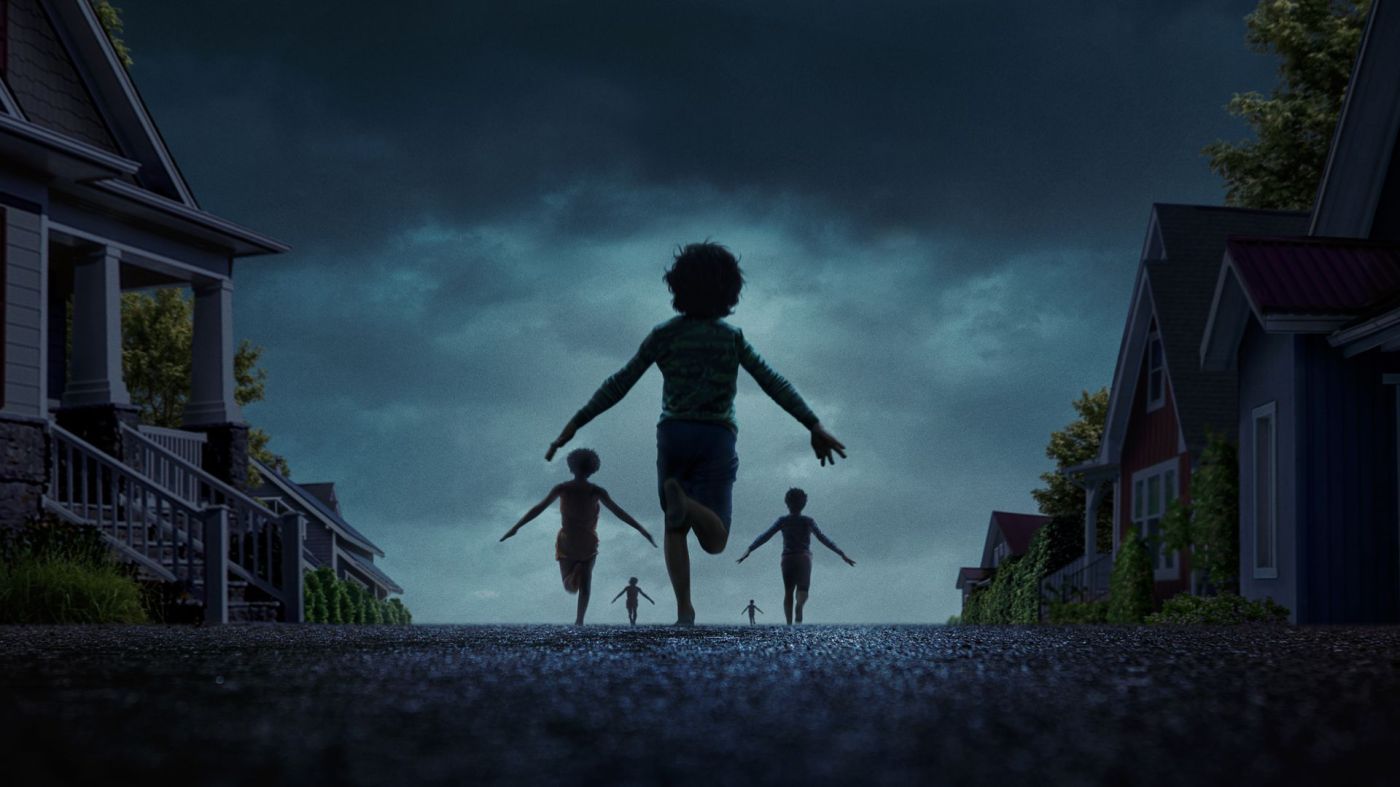
Unlike Barbarian, it’s easier to see where Weapons is heading. Even still, you’re not exactly prepared for the stops Cregger has waiting for you, before reaching that final destination. In Junji Itō fashion, the film kicks off with an unexplained and eerie phenomenon; seventeen children, all students in the same classroom in the same small town, disappeared during the night. This event is depicted in storybook fashion, which becomes more and more fitting as Weapons later leans into its dark fairytale format. But like a fairytale, the sense of logic becomes absent and less critical. There was hardly a legal investigation for the mass disappearance, at least not one shown on screen. Just finger-pointing and dramatic outbursts. Nevertheless, you must go with Cregger’s flow so you can enjoy the rest of the film.
Cregger hasn’t shaken his almost anthological approach to narrative; the perspective shifts over the course of his two films so far. However, this time around, we follow several, rather than two, characters. First, it’s Julia Garner as the missing kids’ teacher who has become the victim of the town’s witch hunt. Not long after getting to know her, you meet Josh Brolin as a grieving father, then those others who are directly connected to the overarching story. This includes a a gay couple (Benedict Wong, Clayton Farris) and a homeless man (Austin Abrams). Naturally, though, the partitioning is a way of piecemealing major plot developments and not having to worry about the explanations until later. Your confusion is bound to be cleared up by the next chapter or so.
Weapons isn’t a case of sophomore slumping, but it also doesn’t evade this era of horror’s most pervasive, and sometimes egregious, behavior. With little to no transparency, Cregger remarks on what used to be a hot issue in the U.S. until everyone, including myself, became desensitized. Not out of a lack of caring, mind you, but because of the lack of change we see. It’s the new normal, sad to say. Anyway, Cregger makes virtually zero attempt at hiding his social commentary, as he displays a giant gun in the sky, albeit in someone’s dream, and has a community mourning the loss of children after a senseless act of what looks to be mass violence. You don’t even have to scrape far below the surface to see what Cregger is working at here, yet at the same time, he’s creative with his cinematic analysis of this one disturbing aspect of real society. Crude and not as thoroughly thought through as I would like, but creative nonetheless. Less productive is the director’s morbid fascination with age and female beauty. In that sense, Cregger is forming a strange pattern in his body of work.
Above all, Weapons is erratically fun, messy, and at times a bit shocking. Simple scares didn’t seem to be the goal here, seeing as Cregger delivered no major fright beats, and he obviously had a different and more pulsating purpose in mind. The curtain reveal is done in a series of waves, and with each delivery you’re likely to become excited and eager for what’s to come. That particular feeling helps to gloss over the shortcomings in the underlying narrative.
Weapons is now playing in theaters.
 Tales from the Paulside
Leave a comment