
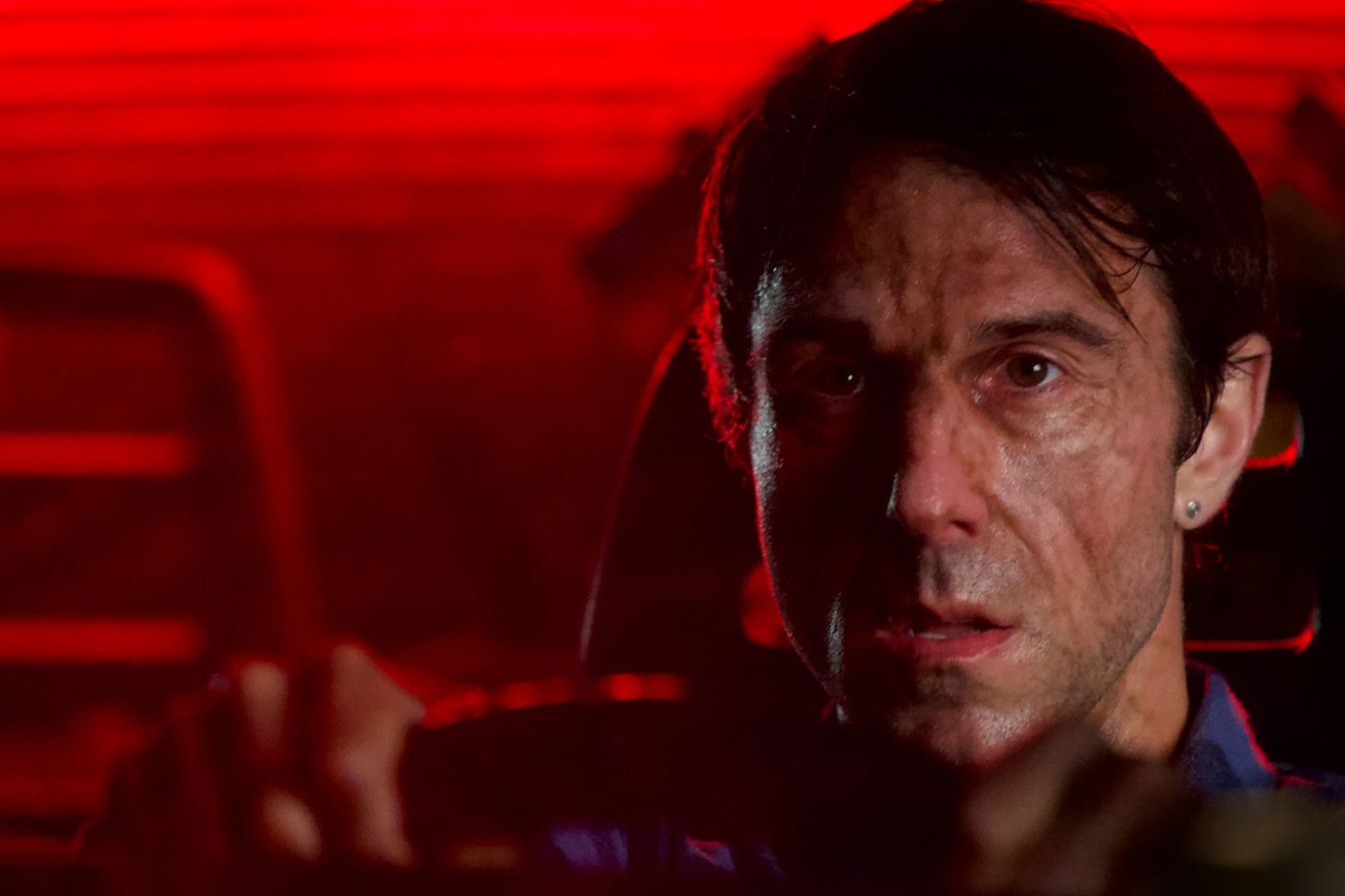
From wendigos to giant man-eating fish, Larry Fessenden is no stranger to monsters. However, the cult filmmaker’s latest movie deals with a more traditional creature of the uncanny persuasion. In Blackout, the community of Talbot Falls — the name is already a hint of what’s to come — people are gruesomely being killed, and a local artist suspects he’s the culprit.
In stereotypical horror fashion, a young couple in mid-coitus is caught off guard by a killer during the cold open. The ensuing bloodbath is shown from the assailant’s perspective, but a glimpse of a hirsute, clawed hand is proof that this no mere madman in the woods. Like the sun coming out after a bad storm, the movie then introduce its main character, Charley (Alex Hurt), and the story’s seemingly tranquil, small-town setting. That unhurried and peaceful quality of Talbot Falls is all part of a façade, though, because something unpleasant is going on here. And that something isn’t entirely the work of an unnatural monster.
With Fessenden running the show, don’t expect Blackout to be a total monster romp. He suffuses the story with slice-of-life drama which may or may not leave horror-hungry viewers a bit impatient from time to time. Yet as the opening scene suggests, this isn’t a bloodless affair. The body count continues to grow in between Charley’s moments of reflection and interpersonal conflict.
While other werewolf movies often take the whodunit route, Blackout is very open about the identity of its monster. Solving a mystery is not the point of this story. On the contrary, Fessenden instead wants to dissect the beast who’s been tearing the residents of Talbot Falls from limb to limb. It shouldn’t come as a shock when Charley, who wakes up covered in dirt and blood almost every morning, turns out to be the killer. What might surprise viewers, however, is how he plans to deal with his dilemma.
A werewolf makes Blackout fantastical, but the townsfolk wrongly blaming migrant workers for crimes makes the movie feel realistic. There is also talk of ecological concerns and inequality that modernize the story further. Admittedly, the social commentary sometimes comes off as too inorganic, but Charley’s need to butt heads with the area’s metaphorical Big Bad Wolf makes this movie more unique and personal.
Fessenden’s love of classic horror movies is spotted in the movie, including the werewolf makeup that references the titular character in 1941’s The Wolf Man. In light of the low budget, though, there aren’t any elaborate transformations to look forward to here. Passionate werewolf enthusiasts will have to look elsewhere for a more effects-heavy movie.
Alex Hurt delivers an astounding performance as the complicated and discouraged protagonist. Fessenden provides a lot to work with, yet Hurt makes the material sing. While Charley is in fact a bloodthirsty werewolf half the time, Hurt still makes his character sympathetic. The actor brings out the monster’s humanity.
The horror parts of Blackout are scattered and not especially pronounced, but they are occasionally satisfying. What ultimately sets this movie apart from others is its poignant character study. Fessenden is to be applauded as he pays careful attention toward Charley, a man who hopes to do something good after all the tragedy he’s caused.
Blackout had its world premiere at Fantasia Fest 2023.
 Tales from the Paulside
Leave a comment