
“So, my apartment is currently being haunted by the ghost of a dead child and he’s trying to kill me. (thread)”
If you were on Twitter in 2017, you would have been hard pressed not to click on the above tweet from comic artist and former Buzzfeed employee David Ellis. It was one of the most exciting distractions before the supposed paranormal activity in Ellis’ apartment came to a stop. As amusing as those tweets were, though, they alone wouldn’t make for a complete movie. Especially one of the horror variety. The “Dear David” saga evidently needed a bit more spirit before it could be manifested.
Turning Twitter threads into movies is less common than you might expect in this day and age. Maybe that scarcity should be taken as a sign. Nevertheless, someone understandably thought to adapt Ellis’ well-publicized haunting as a big-screen story. The outcome? Surprisingly enough, Dear David is watchable. A familiarity with the “real” deal certainly helps, although the movie works well enough on its own.
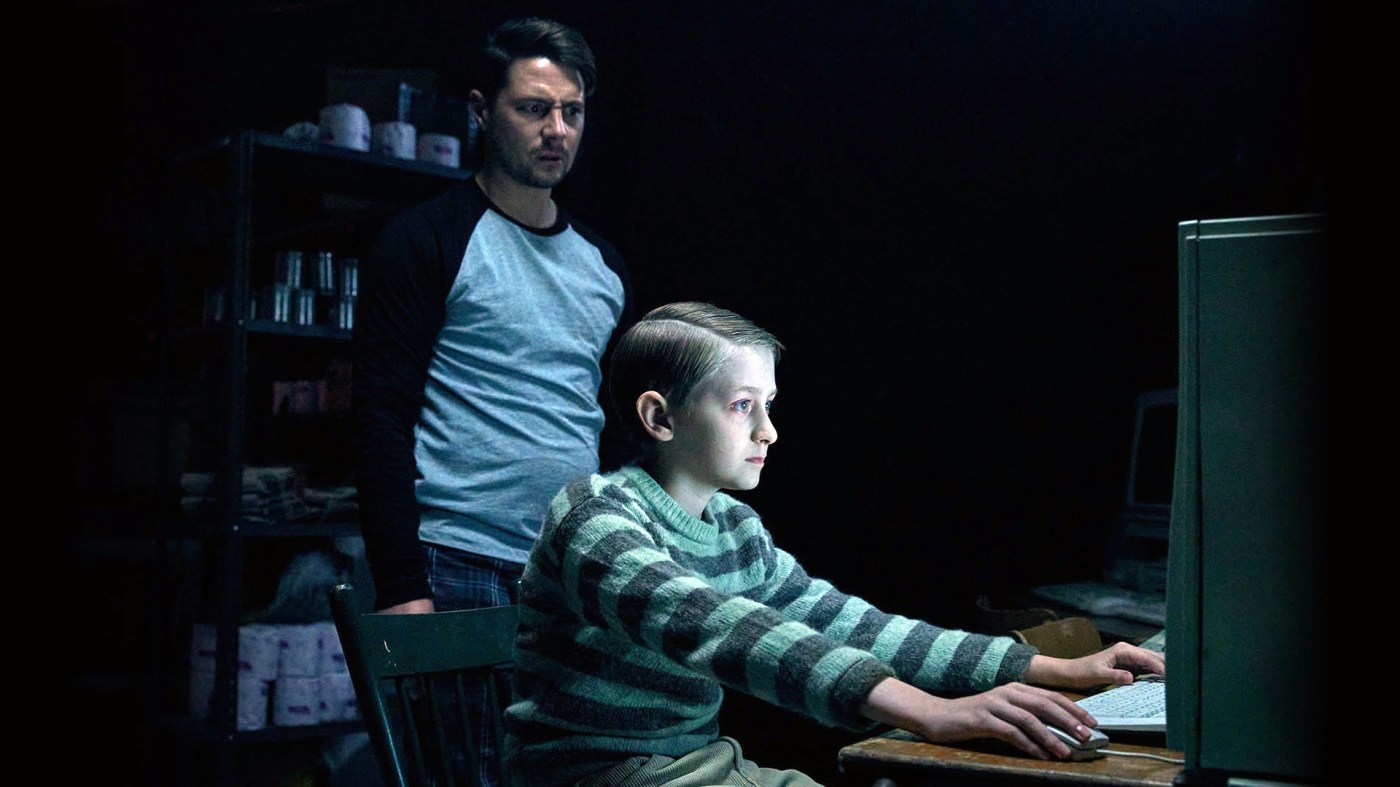
Augustus Prew plays this dramatized version of Adam Ellis when he was still working at Buzzfeed, and Justin Long and Andrea Bang are respectively his boss and best friend. Right off, all isn’t well with this Ellis’ personal life, seeing as he’s pushing away his boyfriend without even realizing it. Then there is the all too relatable fixation with social media; Ellis engages with the online trolls who disparage him and his artwork. This growing vulnerability plays well into what all comes next.
With his relationship on the rocks and his creative confidence shaken, Ellis’ starts experiencing the symptoms of underlying stress. Restless nights become bouts of self-diagnosed sleep paralysis, which in turn pave the way for David. Director John McPhail (Anna and the Apocalypse) does a commendable job of making the ambiguous aspects of Ellis’ story more straightforward, however, Dear David is ultimately another example of why too much information can hinder a horror movie’s effectiveness.
What made the original Twitter thread so compelling was its undeniable sense of uncertainty. Ellis provided a lot of convenient details about his haunting, but regardless, the mystique surrounding David was unsettling. Especially if you were reading the updates in real time and had no idea what was coming next. The movie doesn’t have that advantage, and it typically feels like a belated opportunity. Not being too versed in the story’s inspiration might remedy this shortcoming, though.
Needless to say, Dear David resorts to creative license to help fill in the gaps and make for a more gripping, not to mention satisfying story. The original material relies on tropes intrinsic to past possession movies, such as Ellis losing control over his actions as David becomes more present and influential. The tug-of-war going on here — should Ellis’ haunting be taken at face value, or is he simply imagining everything? — leads to a sizable level of tension before the movie finally picks a side.
Dear David won’t remotely unnerve you like its basis does, yet as a piece of fictionalized entertainment, it succeeds more than it doesn’t. Prew also delivers a credible performance as the increasingly disturbed Ellis. Those devout followers of the actual Dear David story may be disappointed to learn this isn’t a verbatim adaptation, but imagining what happened to Ellis off screen can also be enjoyable.
Dear David will play in select theaters as well as be available for Digital purchase/rent starting on October 13.
 Tales from the Paulside
Leave a comment