
Outside of horror circles, Bryan Bertino isn’t a household name, but within, he is well regarded for making The Strangers. As anyone might gather, based on the outpouring of love and praise, that 2008 movie wasn’t an easy act to follow. And based on the majority of initial reviews, folks would agree that Mockingbird didn’t live up to Bertino’s debut.
I myself was rather pleased with Mockingbird, a sophomore stabber that also centers on home invasions. As a change of pace though, this vicious movie includes victims who don’t even realize they have an intruder at first, and that they’re actually helping the perpetrator in the long run. We the audience pick up on that fact way before the characters ever do, allowing us to be in on the “joke.” It’s a damn nasty movie, and I for one love that.
Despite his lack of directorial experience at the time, Bertino landed the job of The Strangers because the intended director wanted a bigger budget ($40 million versus the eventual $9 million). Even as a modestly budgeted movie though, The Strangers still has a visual polish that is nowhere to be seen in Mockingbird. Shot entirely from a first person’s perspective, Bertino’s second outing falls into the divisive “found footage movie” (hereafter “FFM”) category. Remember, it was 2014, so this POV style was still in effect, albeit less so after a notable deluge. Yes, the format has indeed made a comeback of sorts in recent years after being exhausted last decade. Come to think of it, timing may have had some say in why Bertino’s second movie went straight to video rather than to theaters.
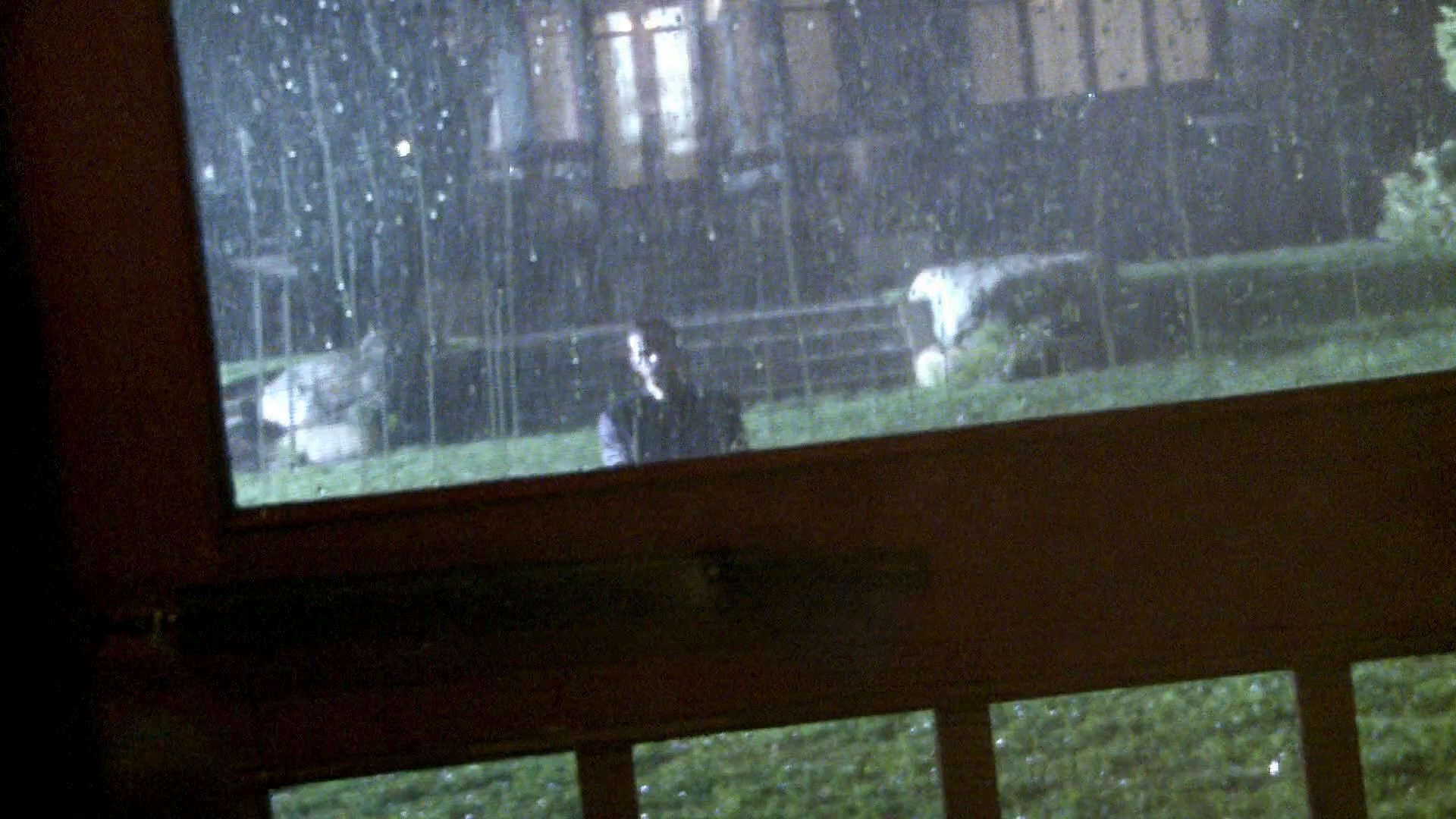
Arguably, the FFM was at its most potent and uncertain around the time Mockingbird arrived. Ideas were still quite fresh and effective. Interestingly and unlike his peers back then, Bertino didn’t use the immersive backdrop of reality to make the supernatural more believable. There is no element of uncanniness here. That conviction to keep the story grounded is instrumental in its overall bite force. For Bertino is a virtuoso of modern nihilistic horror, and that viewpoint is evident in Mockingbird.
Minus the ending credits, Mockingbird is a few hairs short of 80 minutes. So it moves at a faster pace than The Strangers. The characters are immediately imperiled as soon as they turn on their handheld cameras, ones thought to be sent as part of a contest, and then start recording. The type of logic here is strained, but again, Bertino is operating on a negativistic reading of society. That is, people will do anything for money, and they have a low sense of self-preservation. You might contest the realism of Mockingbird and its FFM classification because of these characters’ illogical actions. On the other hand, the story may just strike a nerve when you recall your own foolish, reckless decisions. The difference between us and Bertino’s characters is, we live to tell the tale of how witless we often act.

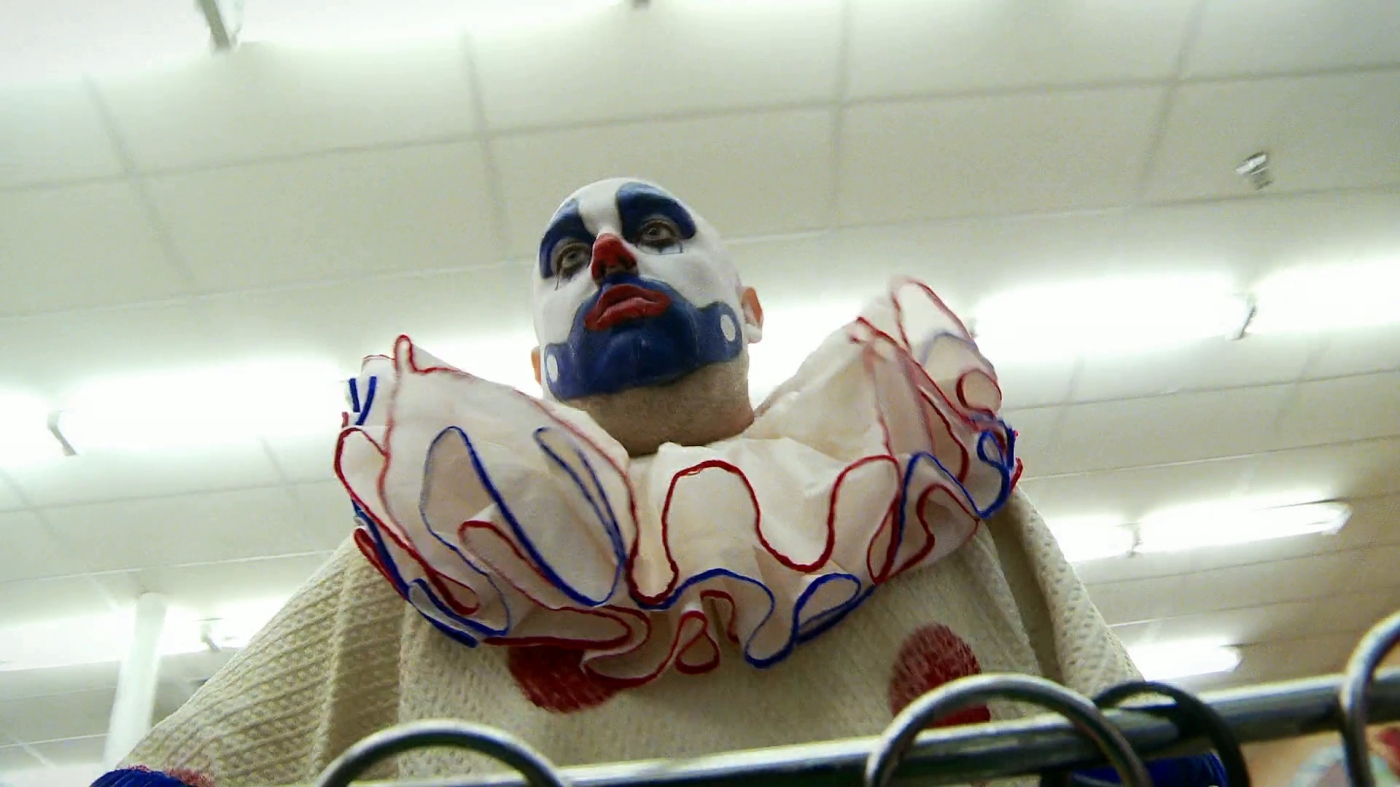
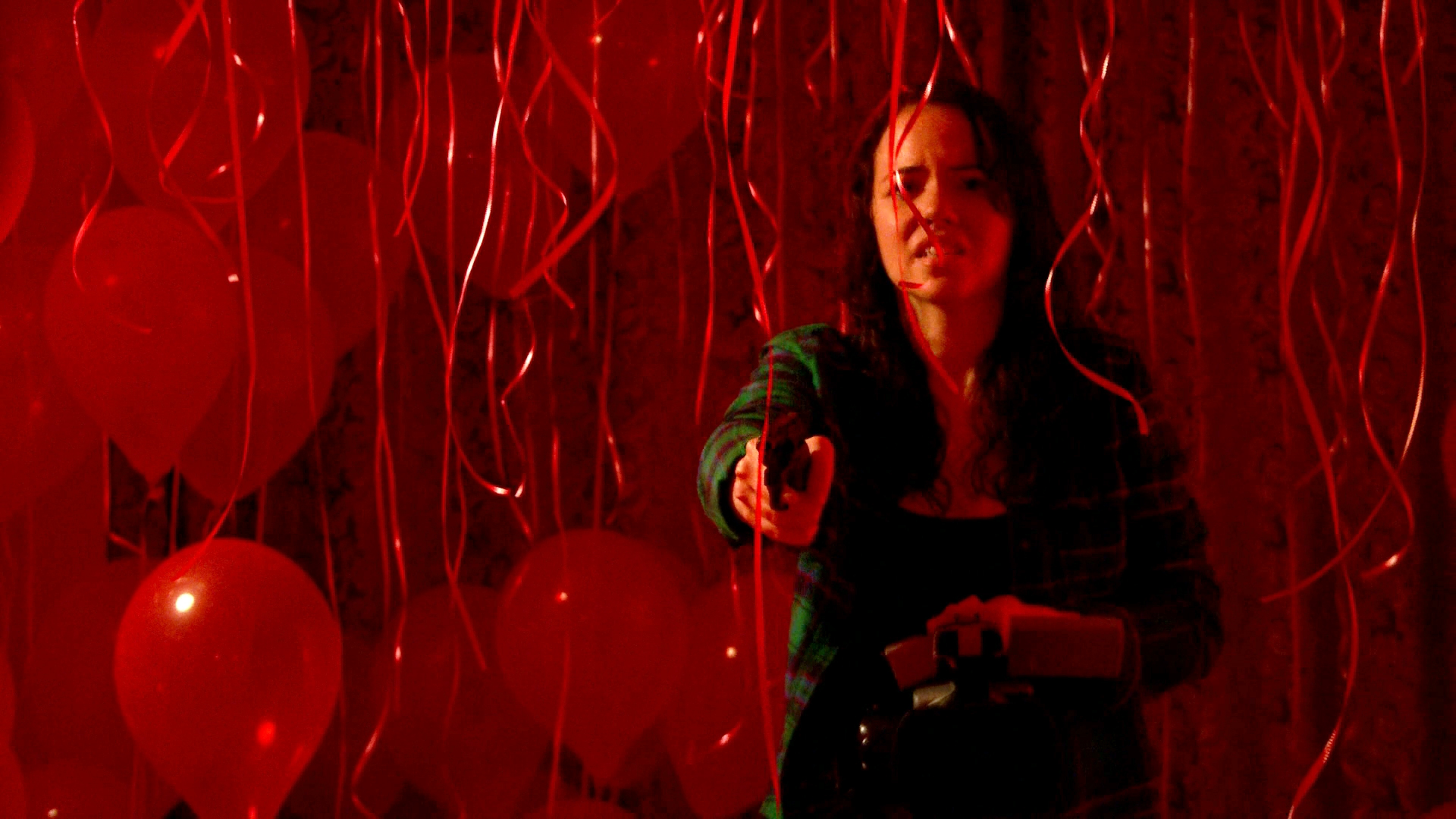
Mockingbird reveals its mean streak right away; the cold open shows a boy shot dead in a bathroom by an unseen shooter. His repeated screaming of “I never stopped filming” is meant to assuage the child’s attacker. Alas, it does nothing but serve as his final words and, to us at home, an early indicator of how the rules don’t matter. Even when you follow them. Then enters the next victims, whose unpretentious lives come to a latent end once they hit the “RECORD” button. Bertino bounces back and forth between these three new marks — labeled on screen as The Family, The Woman, and The Clown — with no apparent favor for cohesion, apart from the cameras. In due time, the glue binding these ill-fated parties is less nebulous as the contest’s organizers reveal their nefarious intentions. To stop filming would be a death sentence, as indicated in the outset.
Admittedly, coherency is not a strong suit here. Mockingbird is hectic, impulsive, and maybe confusing. As with the killers in The Strangers, there is no clear explanation for these sadistic voyeurs. That lack of knowing, however, is what keeps this and other similar movies on the brain. To know everything would end the story darting around in our heads. Whereas Mockingbird only becomes much more of a quandary after the revelation shown at the end. The conclusion doesn’t work for everyone, but it does leave an impression.
Upon finishing Mockingbird, it’s understandable why the movie didn’t reach theaters, garner favorable reviews, or find an audience after all these years. It goes against the grain of most commercial and standard horror. Bertino’s second directorial outing is bleak, thematically inarticulate, and maybe even broaching on needless. Yet for a more concentrated and effective delivery of his feel-bad approach to the genre, nothing quite matches the frenzied Mockingbird.
 Tales from the Paulside
Leave a comment