
As technology evolves, so do movies. And Christopher Landon’s latest feature Drop gets with the times and embraces modern tech that, in a few years, will probably seem outdated. But for now, this one story of coerced complicity comes across as shiny and new, what with the protagonist’s predicament coming from mysterious AirDrops, however, peeling back the movie’s topmost layer only reveals how Drop is really an upgrade of past thrillers.
A succinct, not to mention forceful, digest of Meghann Fahy’s character is fired off at the very beginning of Drop. Naturally that cannonball of a flashback would be revisited in the present day, whenever Violet’s rationalization for her current actions and choices need explaining or rationalizing. In the meantime, this trauma counselor and single mother is nervous for different reasons; she’s going on her first date in a long time. Based on that abrupt glimpse into the past, it’s understandable that Violet would be scared. As the thriller genre dictates, though, there’s more to fear than what we know and can see.
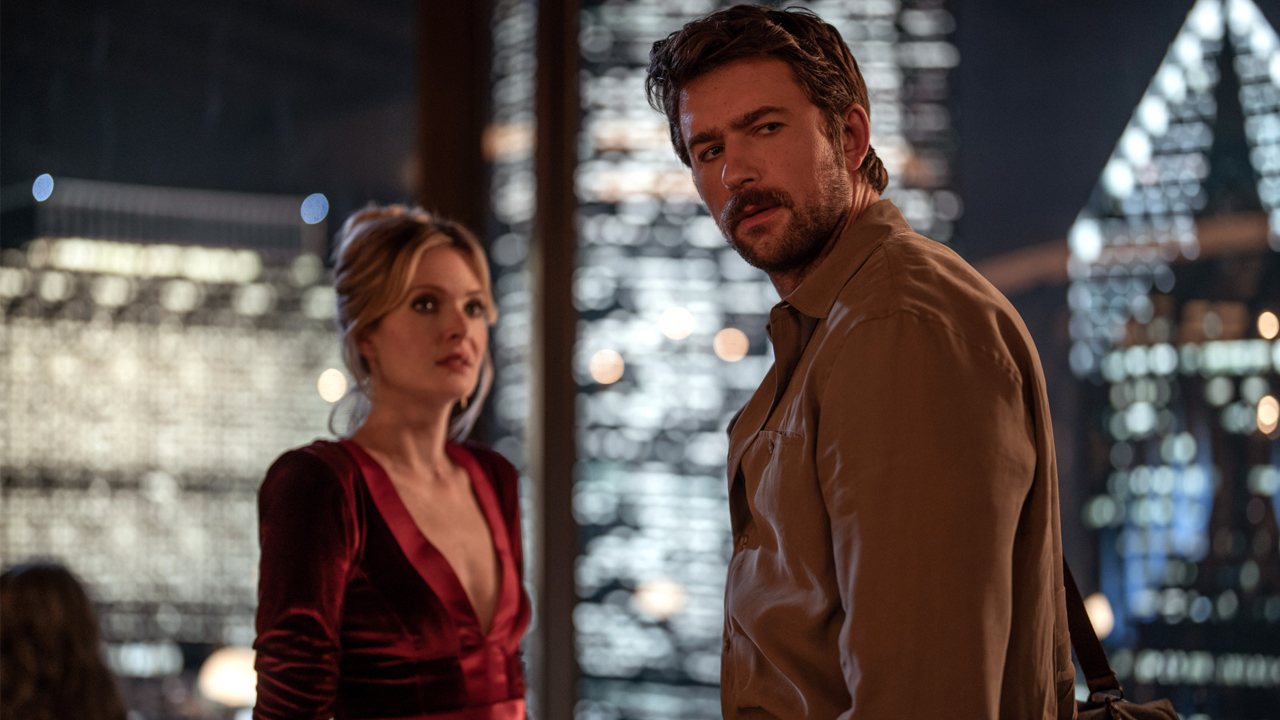
At a high-rise dinner with the mildly tardy Brandon Sklenar, a political photographer named Henry, Violet’s ordeal is served with no appetizer. Untraceable AirDrops cue the peril in store, and once Fahy’s character understands what’s happening and what’s now at stake, Drop kicks into high gear, not to mention goes through the motions. Experienced thrillists know what to expect from Violet’s frantic quest to save multiple people, including her young son, and prevent her assailant’s plan from coming to fruition. It’s as futile as it needs to be to keep the pace up and the tension tight. Even when Landon slackens the rope a tad, there’s little chance of catching your breath. So, on a basic level, Drop masters the rollercoaster quality of the genre.
It doesn’t take long to figure out the unseen antagonist’s objective, among other plot details, before they’re officially revealed, but Drop is so sincere with the delivery and organization that you’re forgiving of its utter lack of surprise. This isn’t a shocking or even spontaneous thriller; it’s calculated from start to finish. However, Landon compensates with visual flourishes that heighten the whole experience. This includes stylish and unmissable on-screen text messages that add to the overall sense of emergency, as well as a clever manner of spotlighting suspects. Your immersion in the story is guaranteed now with Landon reaching into his bag of tricks.
Also tremendous in Drop’s efficacy is the talent in front of the camera. The lens loves Fahy and Sklenar, whose chemistry is the heart of the story. The two lead actors get lost in their characters, and the outcome is gainful. You’re invested in their safety.
In the end, Drop is Christopher Landon’s Red Eye, with some inspiration from Panic Room and Phone Booth. In the same way that the aforementioned Wes Craven pic exploded into a series of well-timed and near cartoonish conveniences at the end, Drop beelines for its own exit after presenting a finely tuned, if not stuck-on-autopilot, buildup. Vulnerable performances and visual design choices, however, help make it all go down easier.
Drop premiered at SXSW 2025, and will be in theaters nationwide starting on April 11.
 Tales from the Paulside
Leave a comment